
Music is more than just art—it is an essential tool for intellectual,
emotional, and personal growth.
Music awakens the thinking, emotions, and talents that exist
within every student.
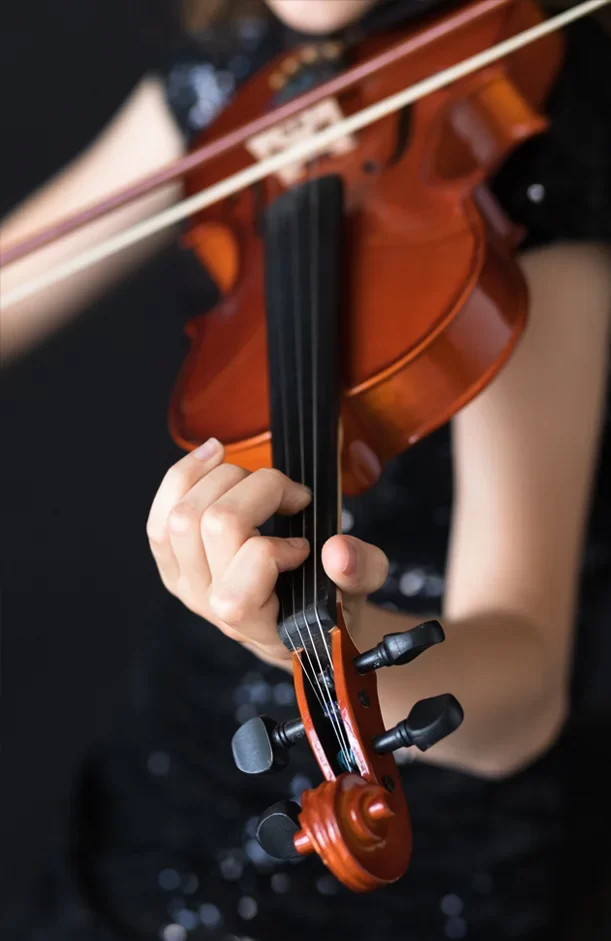

Music learning is not only for future professional musicians, nor for a select few “gifted” with a natural ear. Music education is a right and should be accessible to everyone. At the Setúbal Regional Conservatory, we believe that learning music supports a student’s overall growth, artistically, cognitively, emotionally and socially.
It is widely recognised that learning music from childhood brings significant cognitive and emotional benefits. Research has highlighted differences in the brains of music students, including greater development in certain areas and a stronger ability to build neural connections, compared with people with no musical training.
Through music, students learn to cooperate, communicate, and develop essential life skills.
Performing, creating and even simply listening to music involves complex mental processes that engage both cerebral hemispheres. Music learning develops:
Skills often linked to the left hemisphere, such as logical, analytical and sequential thinking—also central to mathematics and language;
Skills linked to the right hemisphere, such as the ability to synthesise, connect and contextualise information, recognise patterns, and understand and manage emotions (one’s own and others’), strengthening empathy and social skills that are increasingly valued across many fields, including business environments.


The benefits of studying music are not limited to the brain. Singing can help improve:
Breathing capacity;
Posture;
Vocal production, including projection and diction;
Playing an instrument strongly supports motor coordination, especially fine motor skills, which are important for many everyday activities and future learning;
Music and social skills: learning together.
Learning music within a choir or orchestra teaches teamwork and reinforces core values, such as:
Respect for others;
Recognising and accepting each person’s role within the ensemble;
Understanding how individual contribution shapes the group outcome;
Music can also support social integration for children and young people who find relationships challenging, by providing a powerful tool for expression and belonging.
Many studies suggest that music education is associated with improved academic outcomes. Beyond cognitive development, music learning positively influences:
Concentration;
Organisation;
Time management;
Personal discipline.
These skills support school achievement and remain valuable personal resources throughout life.
At the Setúbal Regional Conservatory, our goal is not only to train good musicians. We aim to do more than that: to help shape better people, more cultured, more human, more engaged, and more capable of meeting life’s challenges. From that journey, good musicians emerge naturally.
In this section you will find answers to the most frequently asked questions about the courses, activities and organisation of the Setúbal Regional Conservatory. If you cannot find the information you are looking for, please contact the conservatory office for further assistance.
Yes. The classes are designed for children ages 3 to 5, using a progressive and natural approach focused on listening, singing, and movement.
Develop a foundation in musical vocabulary and listening skills, which will enhance musical development as well as attention, coordination, and expression.